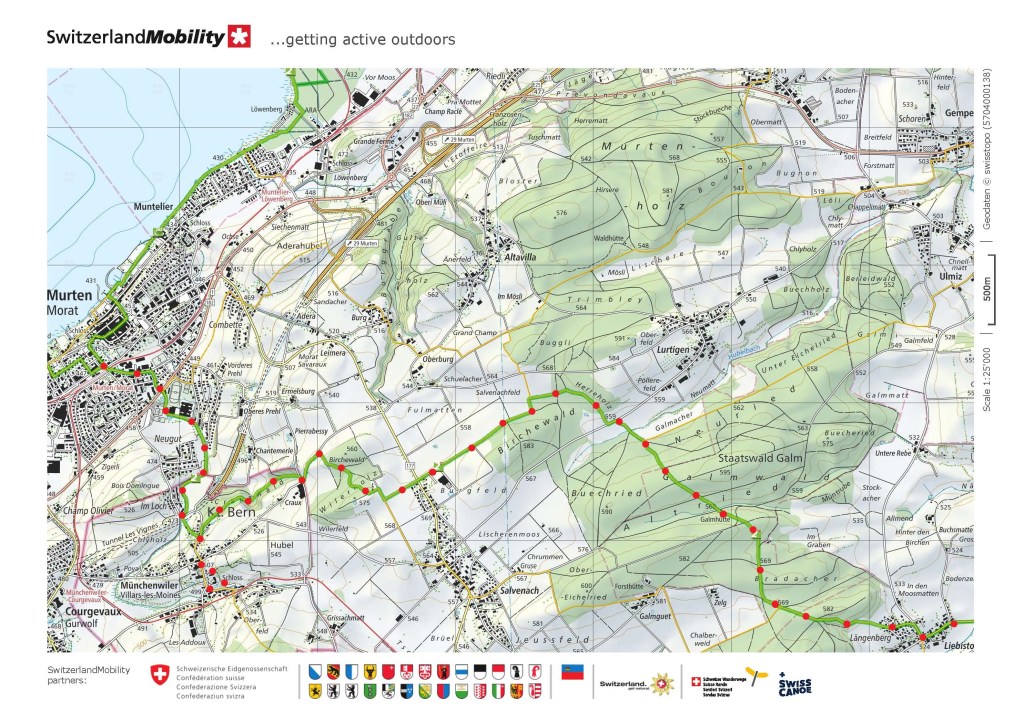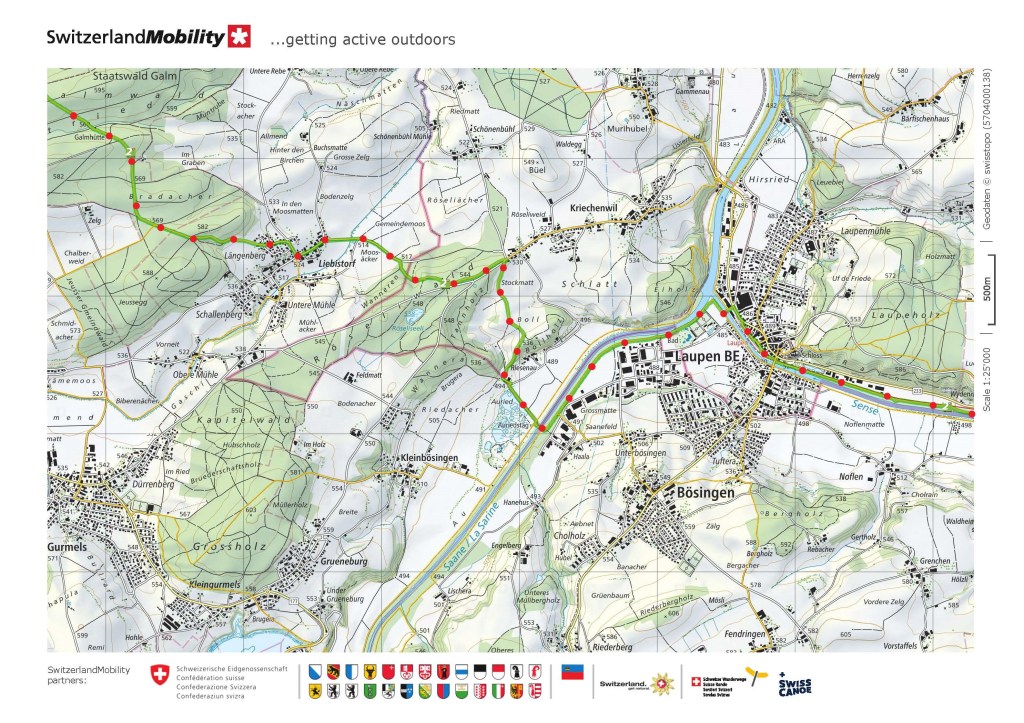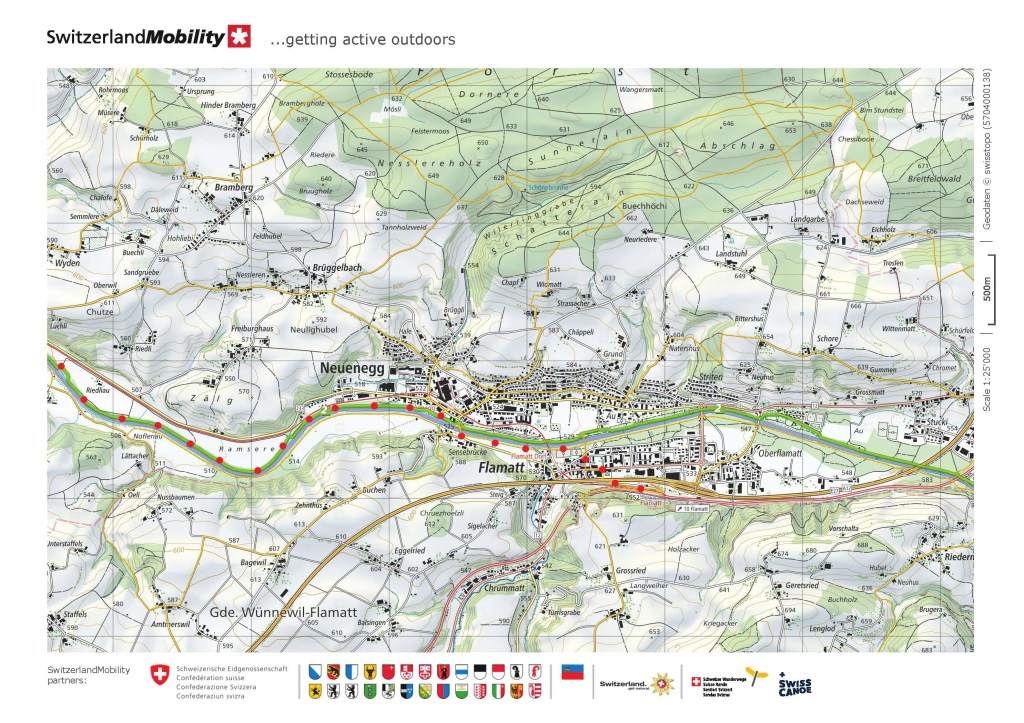
I decided not to wait but to move ahead with the next stage of the Trans Swiss Trail while the weather was settled and dry. Notice that I don’t say that it was warm. I have a theory that the weather is often related to the phases of the moon. After all, if the moon can pull the ocean waters to cause high and low tides, then it can surely pull air masses to influence our weather. And with the moon near full, the weather was settled, as I say, but not warm. The clear skies at night at this time of the year in Switzerland give cold mornings, with rapidly rising temperatures during the day.
And so it was that I arrived back in Murten in the cool of early morning. With plenty of time to get to where I wanted to go, I decided first to take a short look at the town itself. So I circled back around to the gate on the northern side of the town and entered the same way as last week. But this time I followed the walls around to the German church, which is integrated into the north-east corner of the town walls. There has been a church there since 1399, though the present structure dates back to the early 18th century. Apparently, it is in the baroque style, and I would like to be able to report that it is very ornate, as befits a baroque church, but it was closed.
However, right beside the church is the entrance to the ramparts of the town. The sign says that they are closed at night, but even this early on a Sunday morning they were open. I was the only person on the ramparts at that time. The view from the ramparts is special, looking over the whole town and the lake beyond. One can only imagine the town’s defenders looking out in 1476 at the Burgundian army beyond the walls, and their relief at seeing the Swiss victory in the battle there.
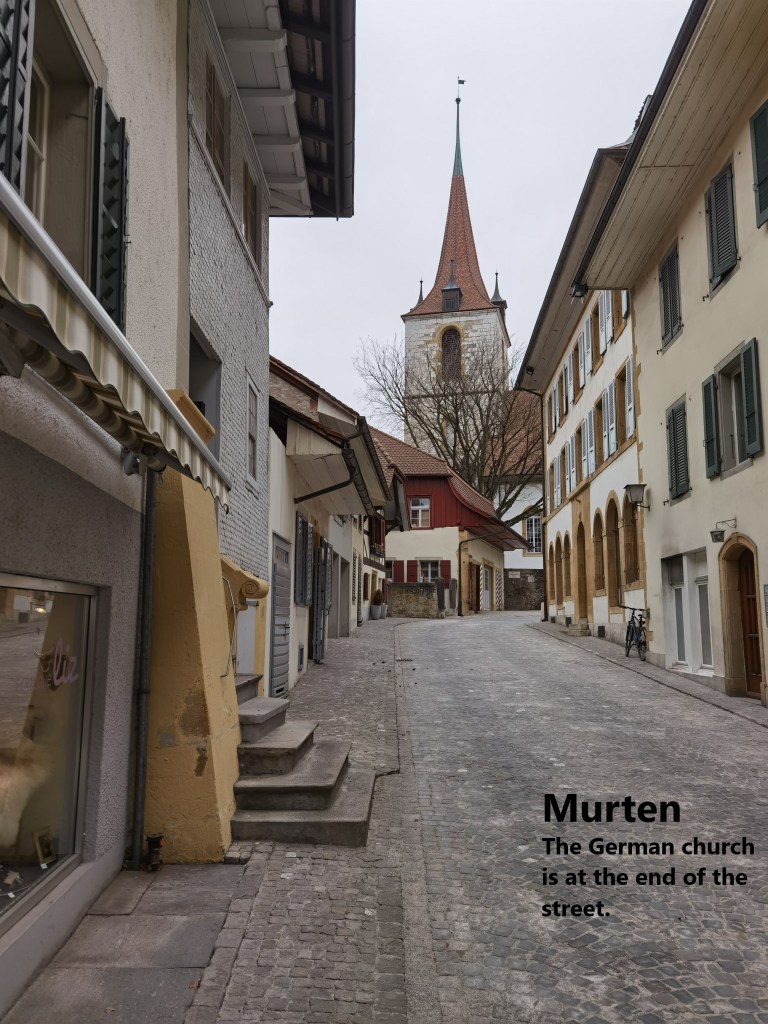
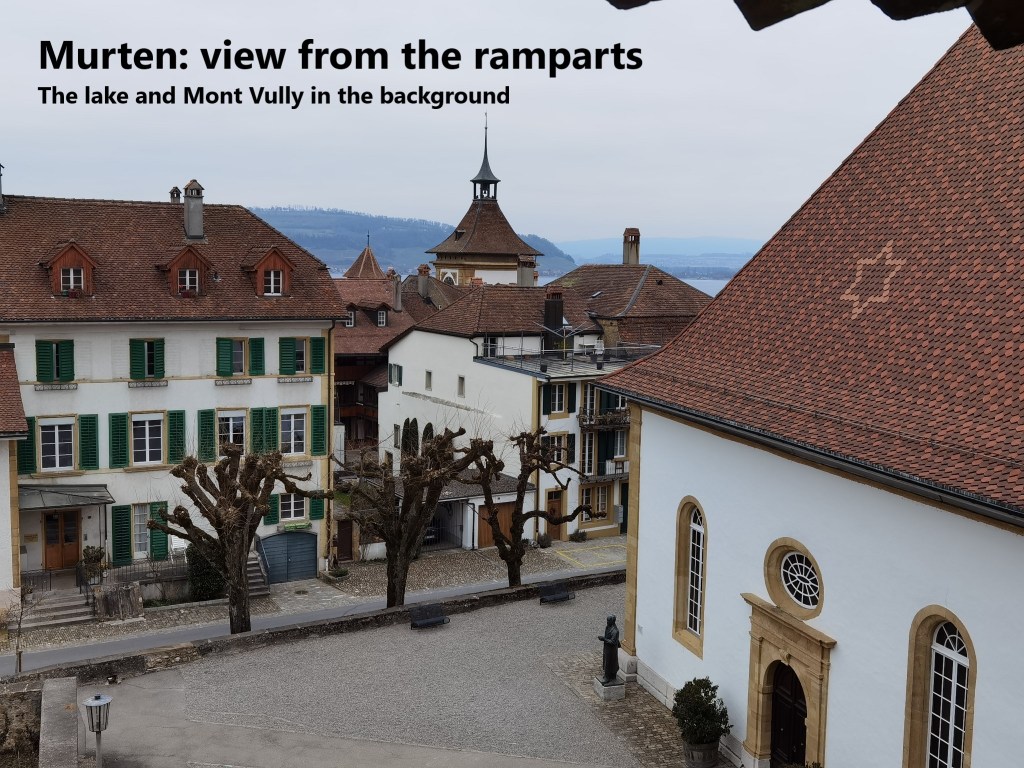
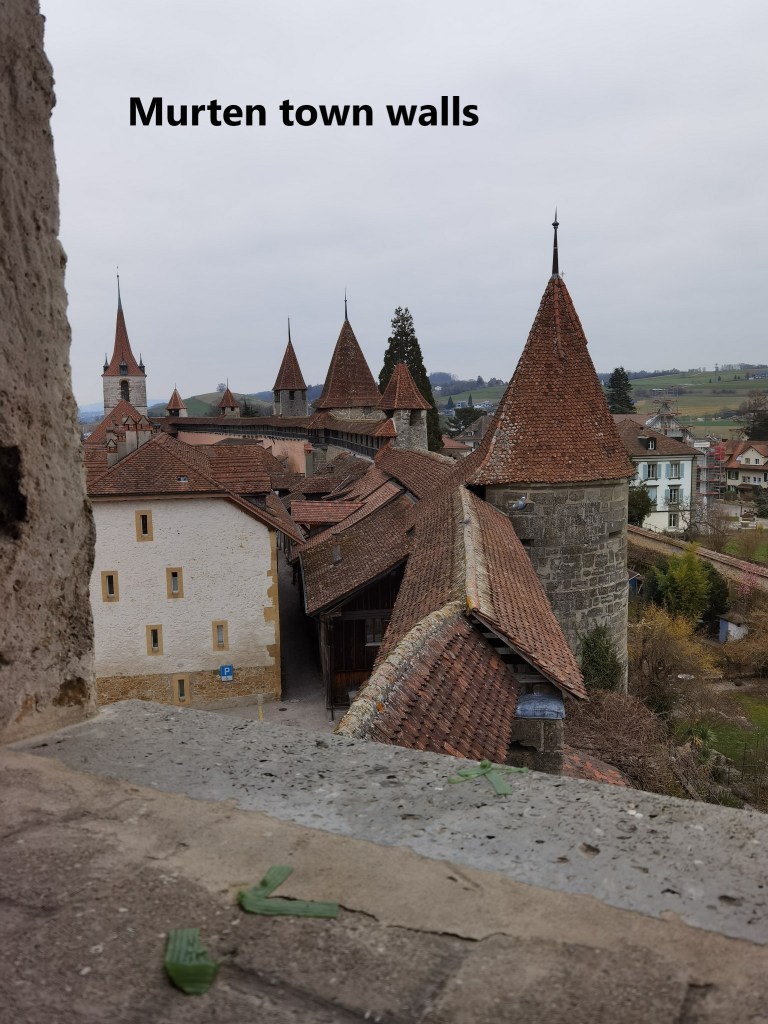
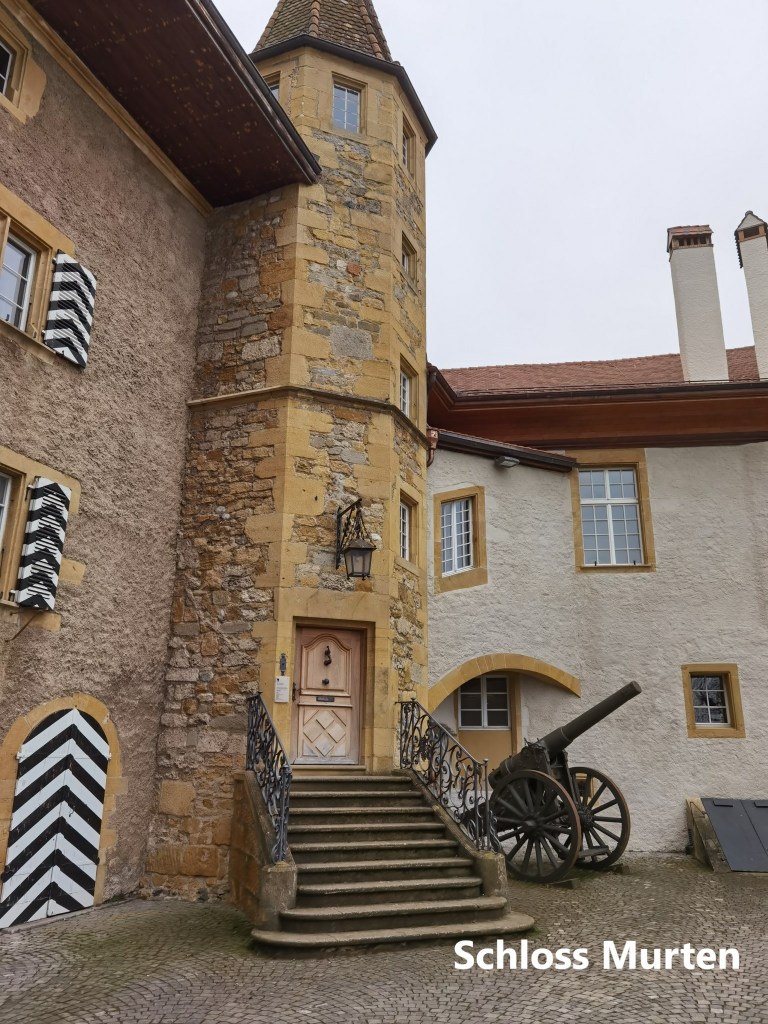
I followed the ramparts right around to the southern end. On descending back to street level, I looked in briefly at the castle. In these days of pandemic and restrictions, everything was closed, so I did not hang around but soon went on my way.
The trail goes out through the western edges of the town and out into the fields beyond. There is a short rise towards the village of Münchenwiler. However, the trail does not go into the village, but takes a sharp turn northwards. I had other ideas though, and went on into Münchenwiler, specifically to visit the Schloss of the same name.
Münchenwiler Schloss started out in the 12th century as a priory, but its religious status did not stop it from being damaged in the numerous wars that Switzerland endured. In the struggles between the emerging states of Bern and Fribourg, it was damaged after the battle of Laupen in 1339 and the Freibourgkrieg of 1448. It was damaged again during the Burgundian invasion of 1476. Since then, it went through more than 300 years of private ownership before becoming a community Hochschule, and adult education centre, and most recently, a hotel and convention centre.
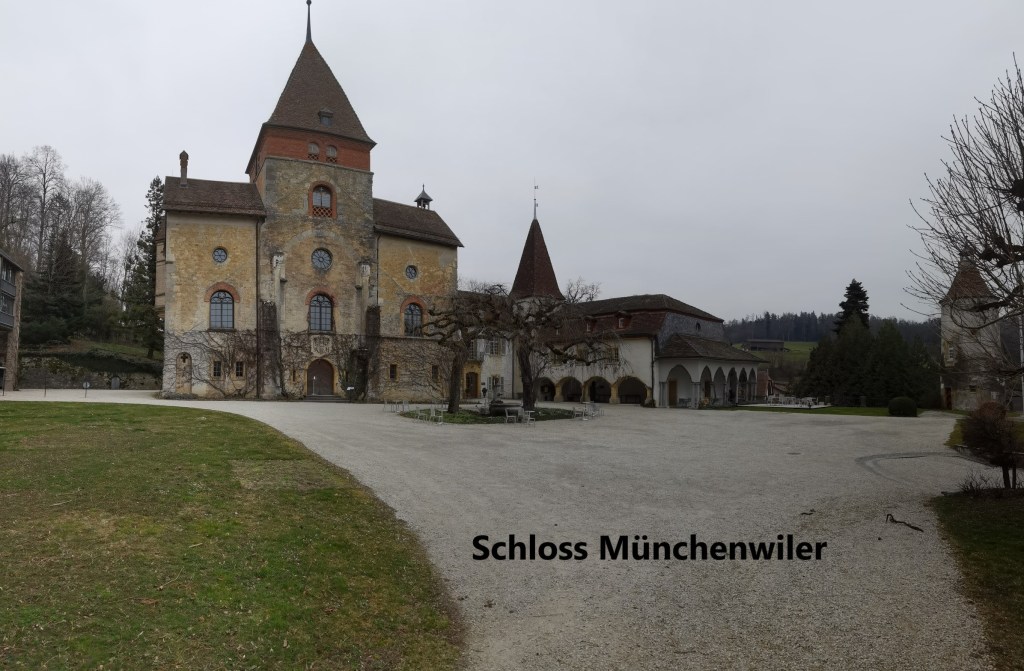
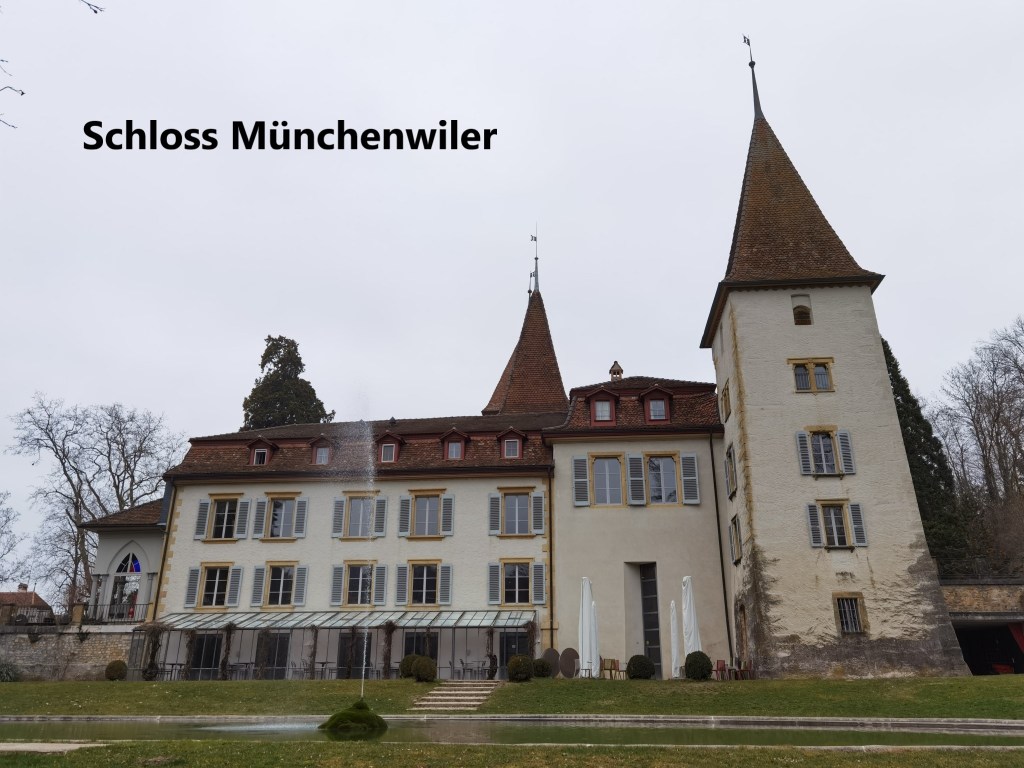
I would have liked to have breakfast in the Schloss, but everything was closed, so I had to be content with simply walking around it before going on my way. I was soon back on the trail. I went through the Crauxwald and the Birchewald to reach the village of Salvenach. These hills are something of a watershed, and just between the two forests, I was able to take a last look back at Murten, Mont Vully, and the lake between them.
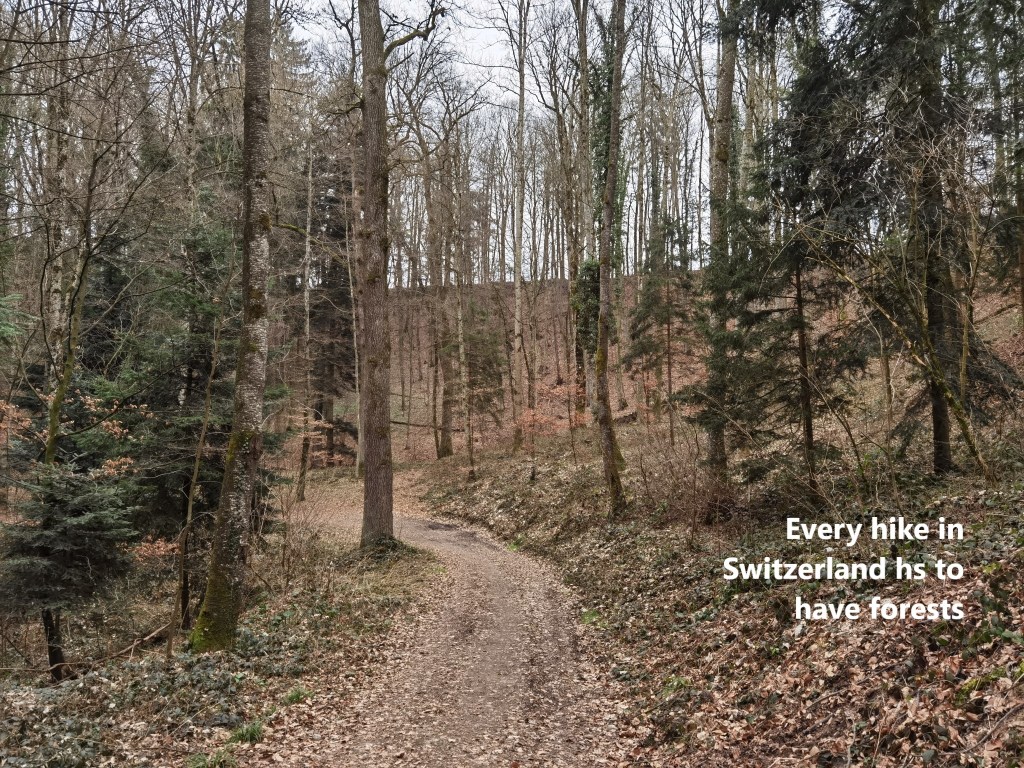
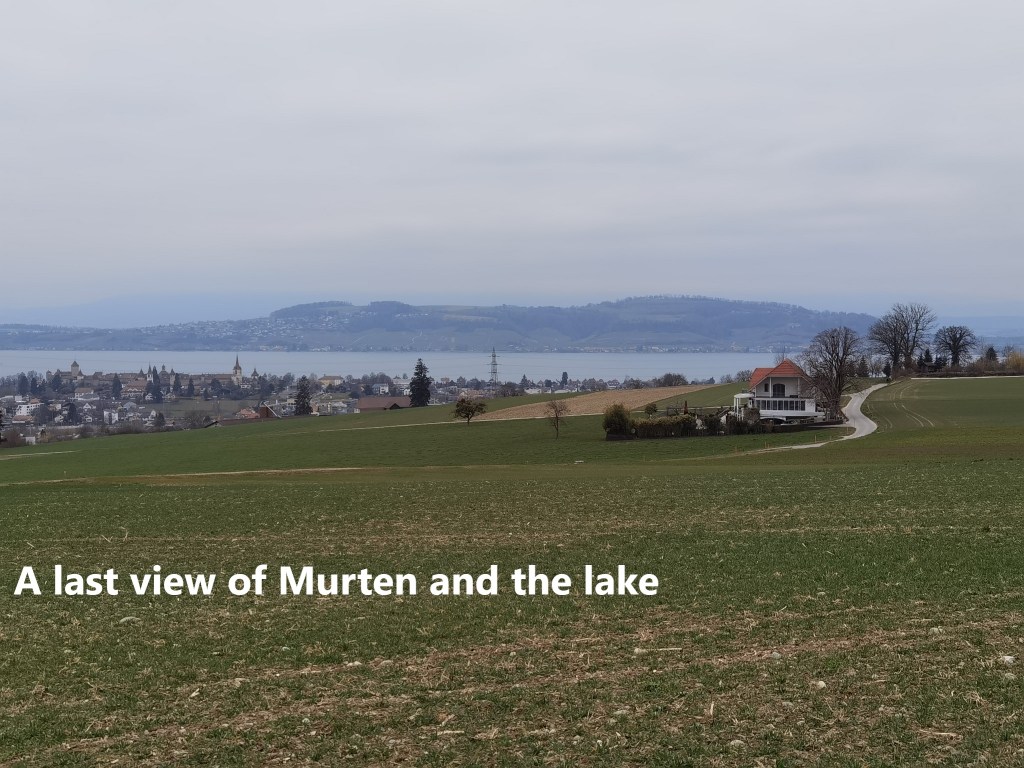

The trail barely touches the edge of Salvenach before crossing some open ground and back into the forest. That forest stretch is a long one, going for some three kilometres before emerging again on the edge of the village of Liebistorf.
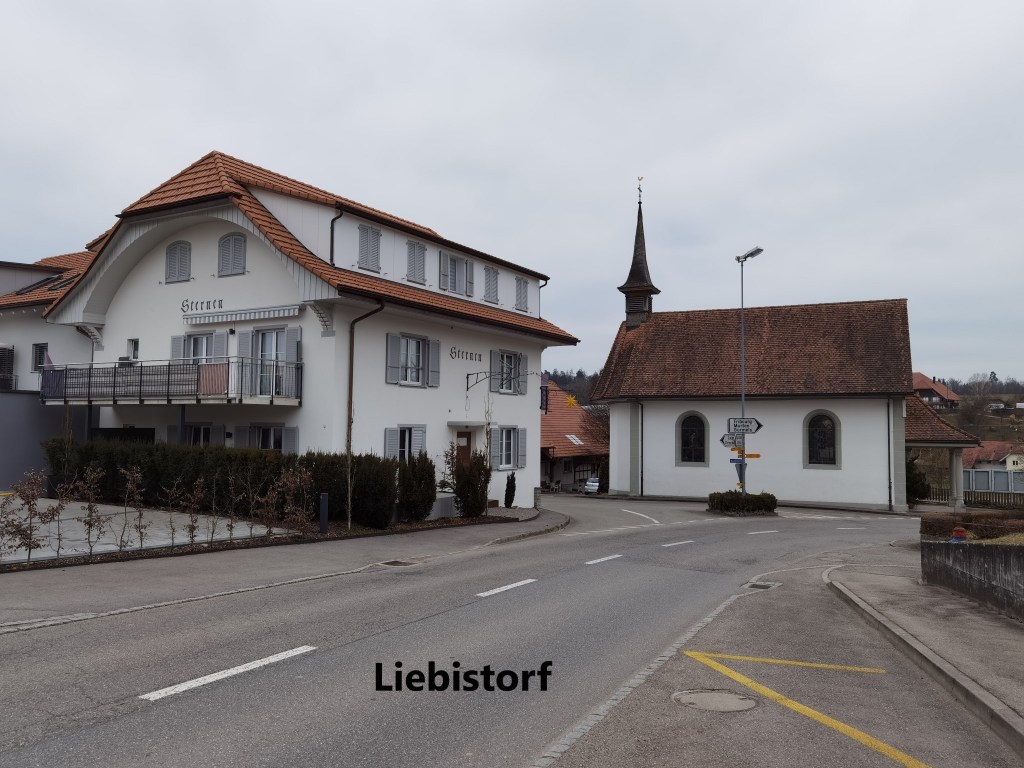
The village is first mentioned in documents from the thirteenth century. It has at different times been under Bernese rule or part of Fribourg canton, as the tensions between those two moved the border backwards and forwards. Today it is firmly part of Fribourg.
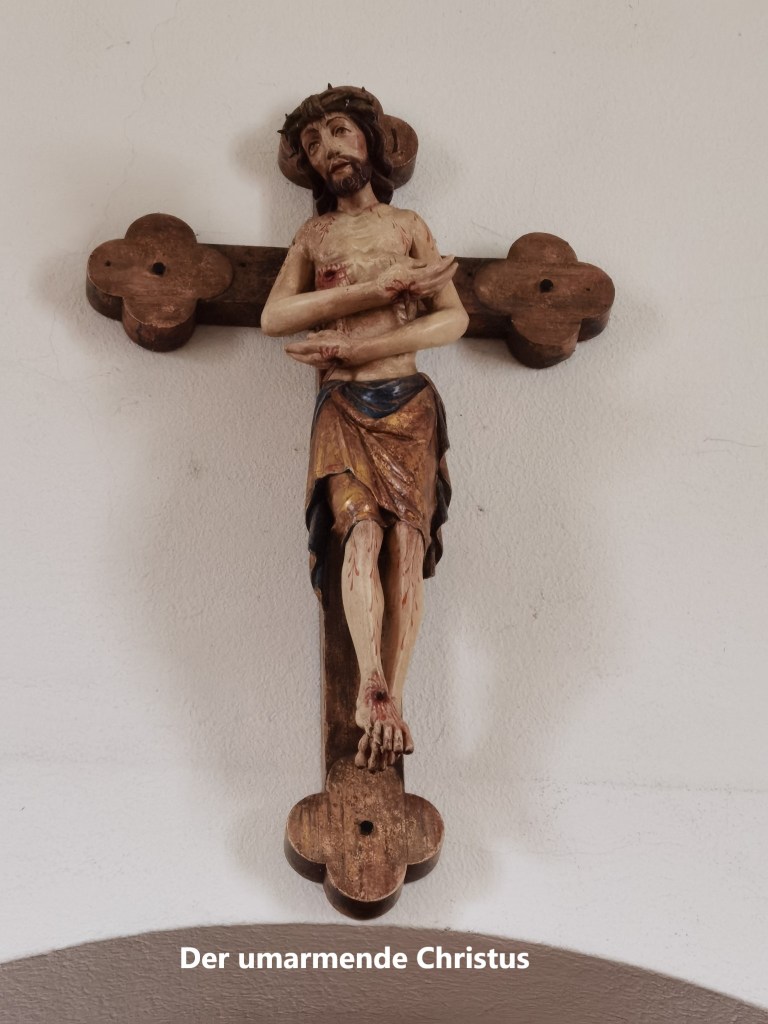
The church dates to the sixteenth century but was completely rebuilt in 1838. It is noteworthy for having a statue that is referred to as “Der umarmende Christus”, or “The hugging Christ”. The statue is actually a copy of one in Würzburg in Germany.
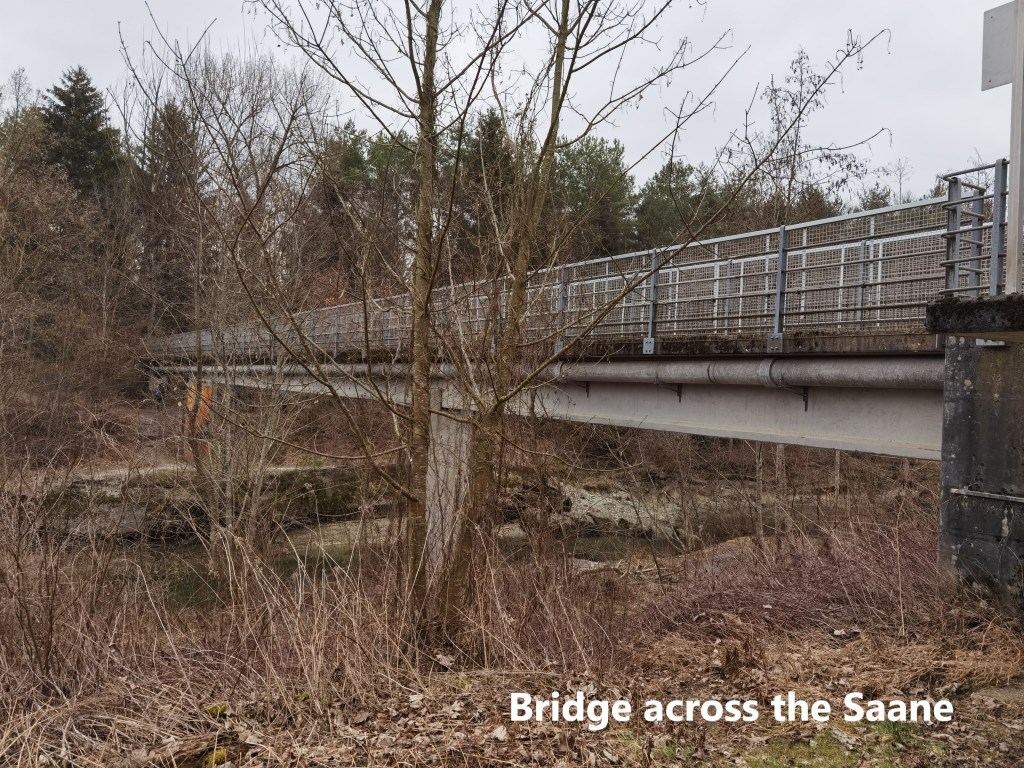
After Liebistorf, the trail took me through a short stretch of forest land and fields to reach the river Saane. I crossed over the footbridge and followed the river downstream towards Laupen, where it joins with another river the Sense, before flowing onwards towards the Aare.
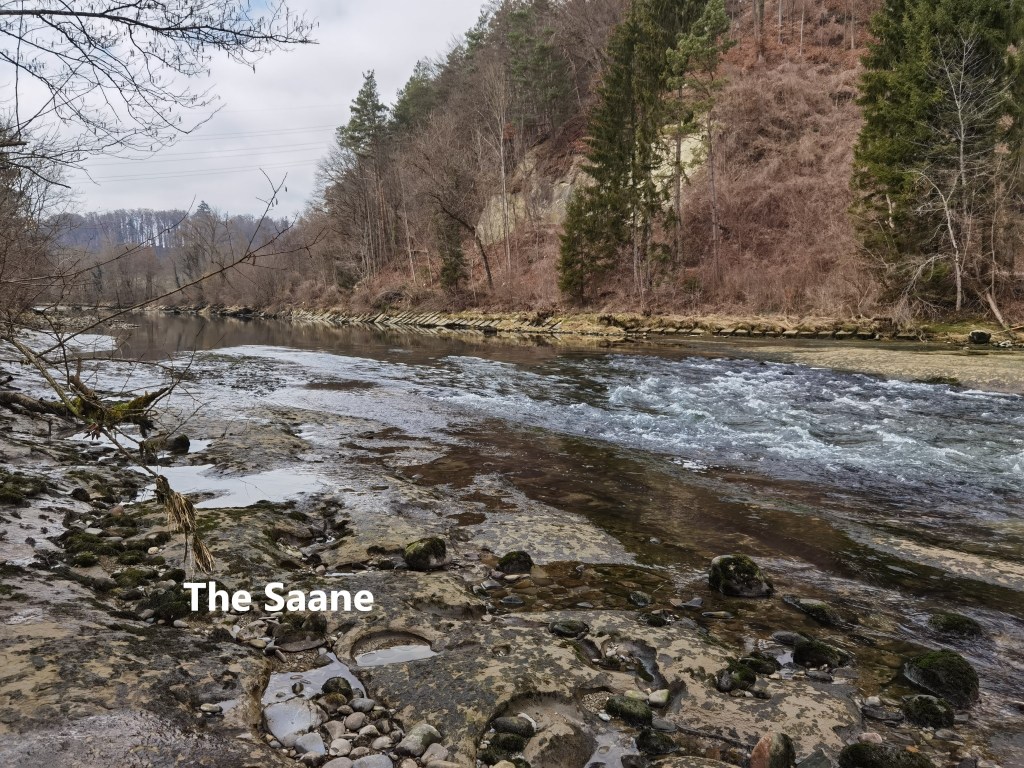
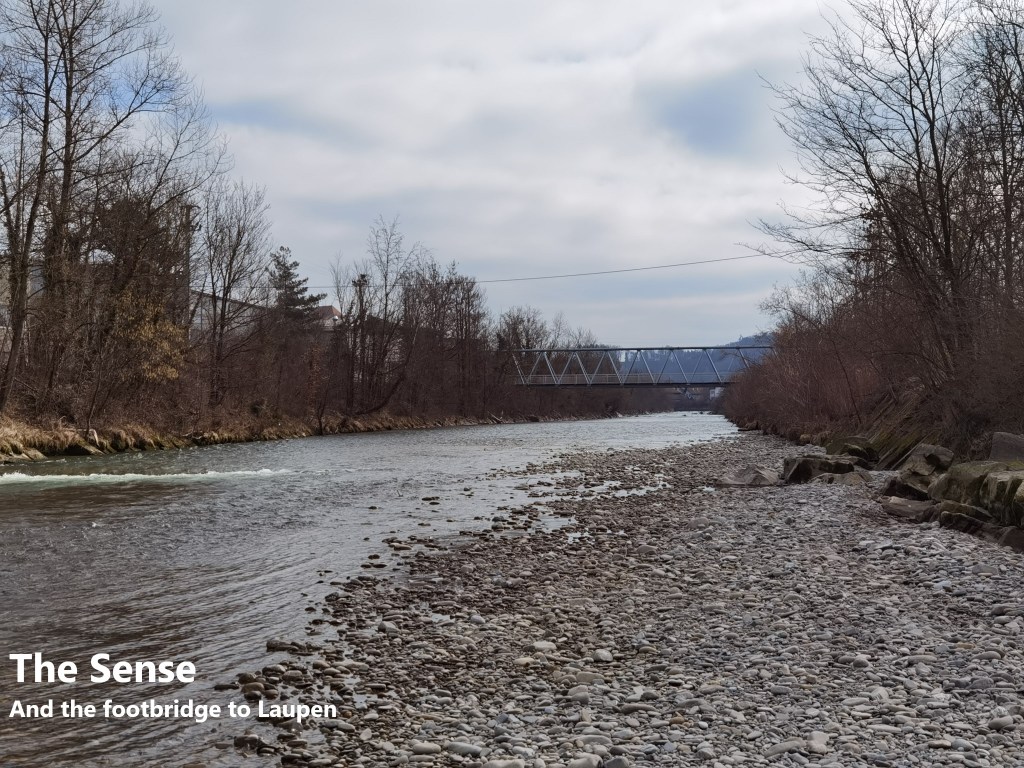
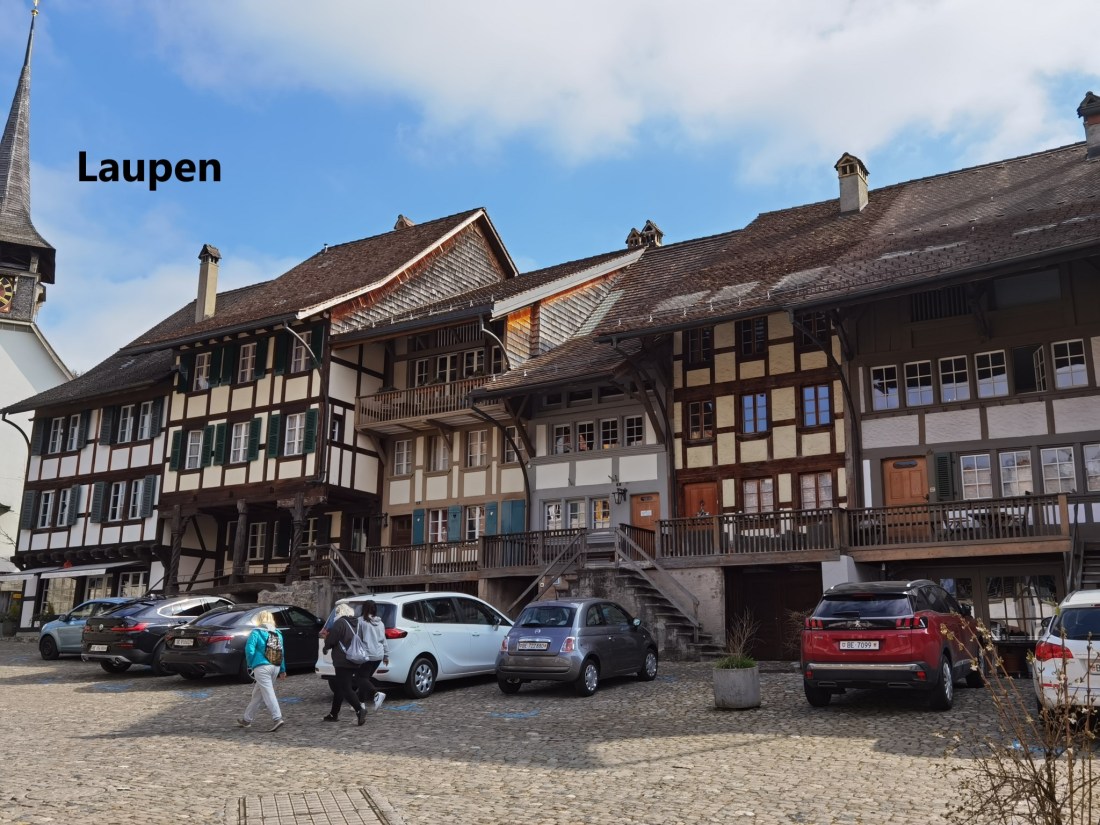
Laupen is another town with violence in its past. There is a famous quote in the film The Third Man, where one of the characters delivers the following line: “In Italy, for thirty years under the Borgias, they had warfare, terror, murder and bloodshed, but they produced Michelangelo, Leonardo da Vinci and the Renaissance. In Switzerland, they had brotherly love, they had five hundred years of democracy and peace – and what did that produce? The cuckoo clock.” It is used in the film to justify the unjustifiable. Not only that, but it is false. Switzerland never had five hundred years of peace, and Laupen is a part of that history.
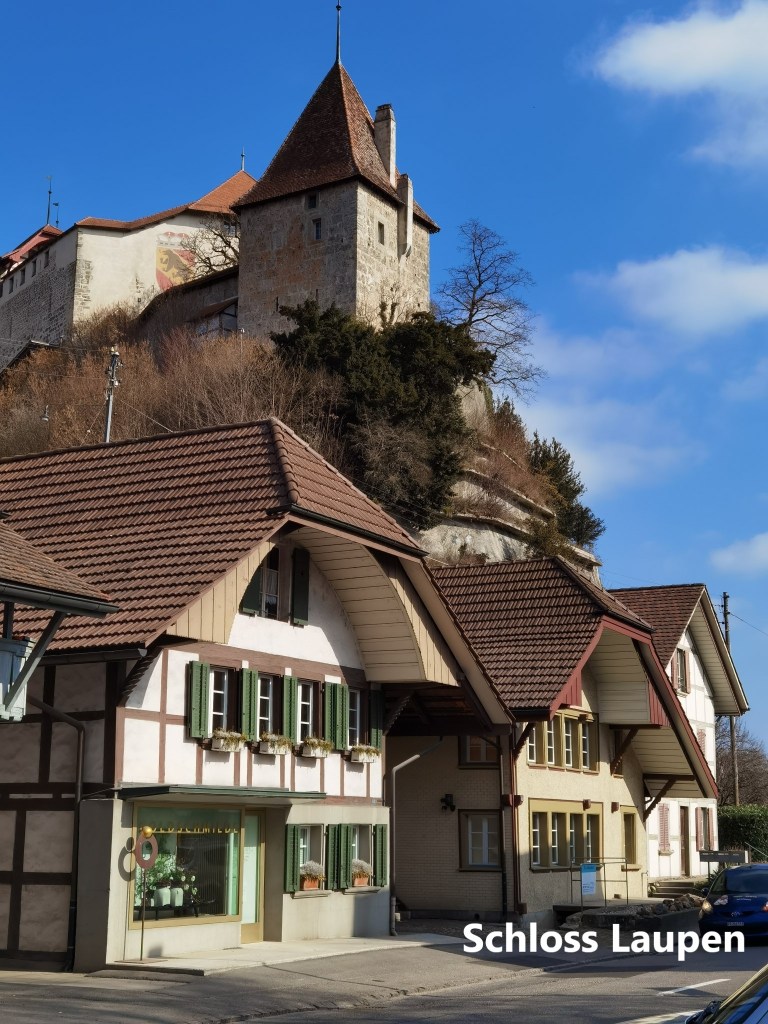
In the fourteenth century, rivalry between the states of Bern and Fribourg led to war. In the complex alliances of the time, an allied army of about 17,000 men marched on Laupen in 1339 on behalf of the Fribourg cause. They besieged the castle, which had a garrison of 600 Bernese troops. Bern could only send 6000 men as a relief force because they felt threatened by Hapsburg forces to the east. The 6000 men from Bern and the “Forest Cantons” of Luzern, Uri, Schwyz and Unterwalden drew up in battle array on a nearby hill. It should be remembered that there were no guns at that time; the only ballistic weapons were longbows and crossbows. Knights in armour were considered invincible. Seeing such a small Bernese force, the Fribourgers and their allies attacked. The cavalry attacked the contingent from the Forest Cantons, who formed a defensive formation known as a hedgehog. The Fribourger infantry attacked the Bernese contingent, who drove them off easily. The Bernese then turned to relieve the men of the Forest Cantons, sandwiching the Fribourger cavalry in a murderous trap. The result was a victory for Bern that also impressed Europe. Knights on horseback were no longer the dominant force that they had been, and Swiss style infantry formations began to appear in armies all over Europe. It is also noteworthy as the first battle where an army wore the white cross of Switzerland as part of their clothing.
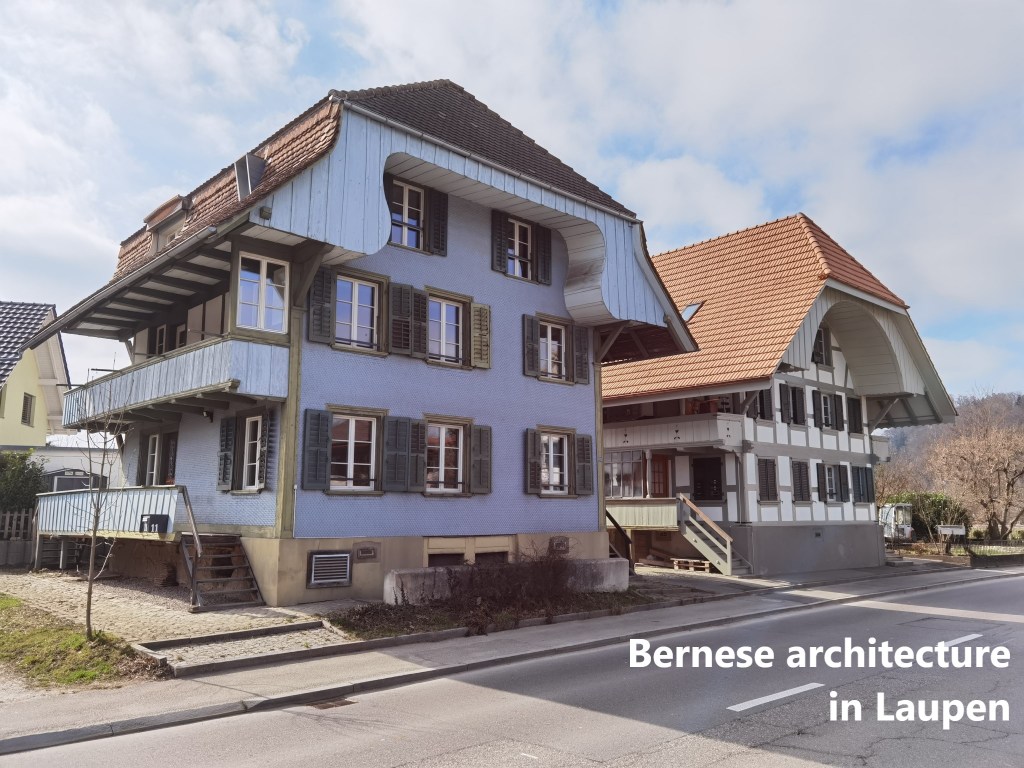
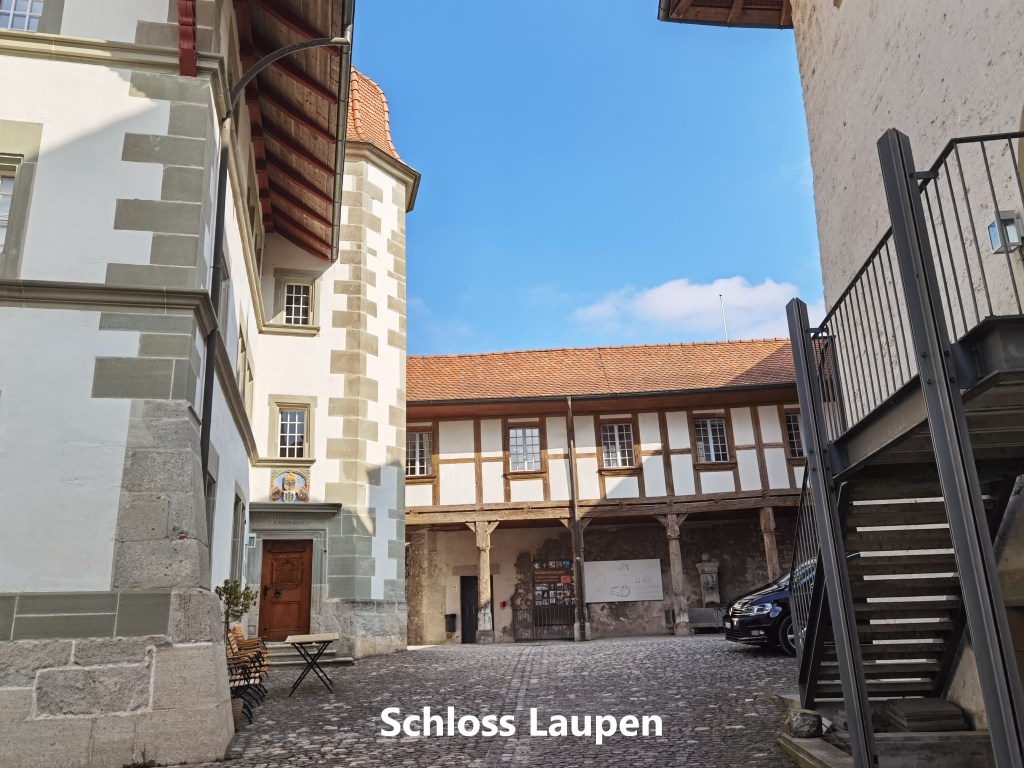
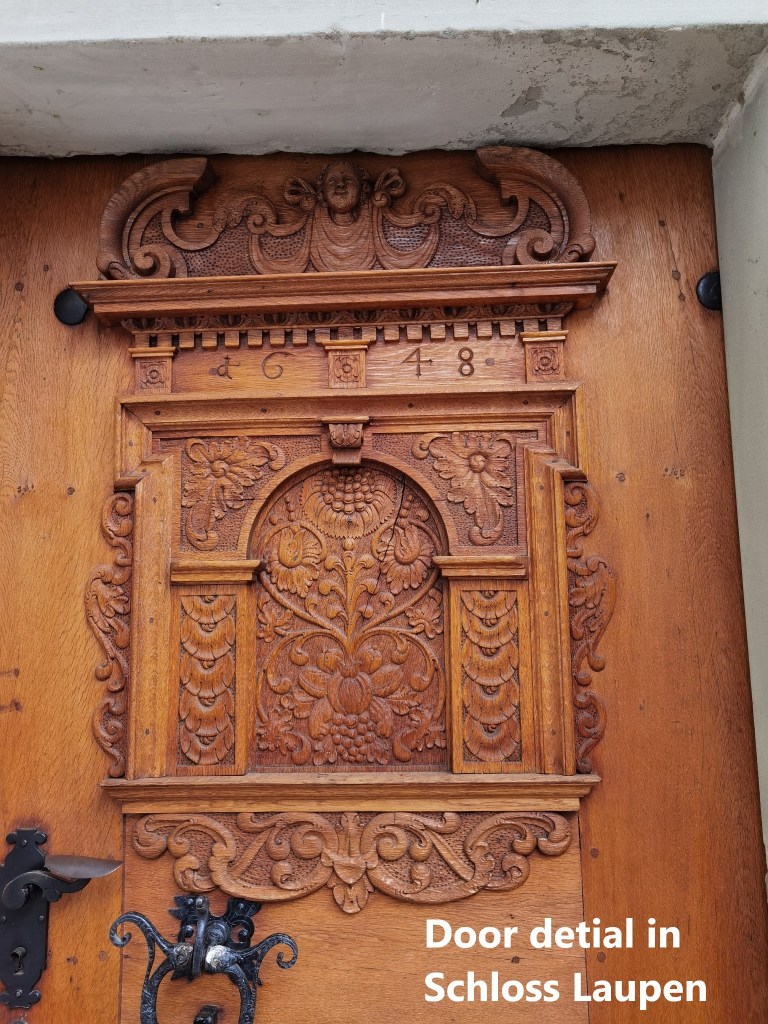
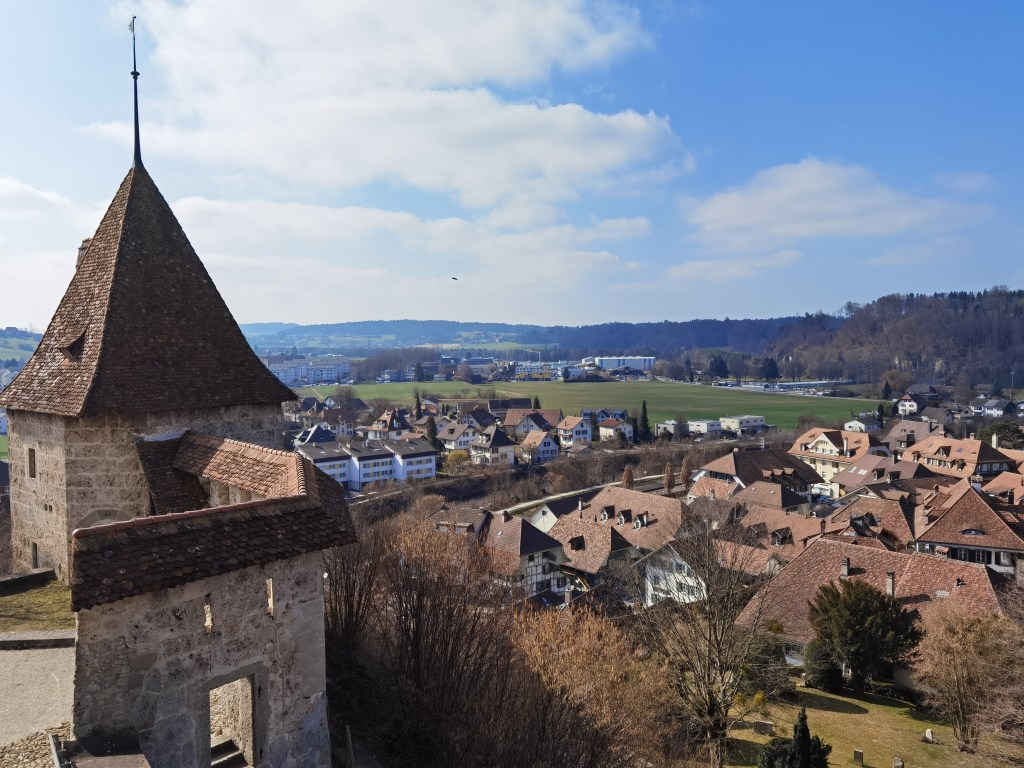
Today, Laupen castle is an altogether more peaceful place. In the sunshine, I had magnificent views of the surrounding countryside. Laupen itself is a quaint town. There are numerous examples of Bernese architecture, those curving eaves under the gable end roofs of the houses. I would have like to stop at a restaurant for lunch, but in these days of restricted openings, that was not possible.
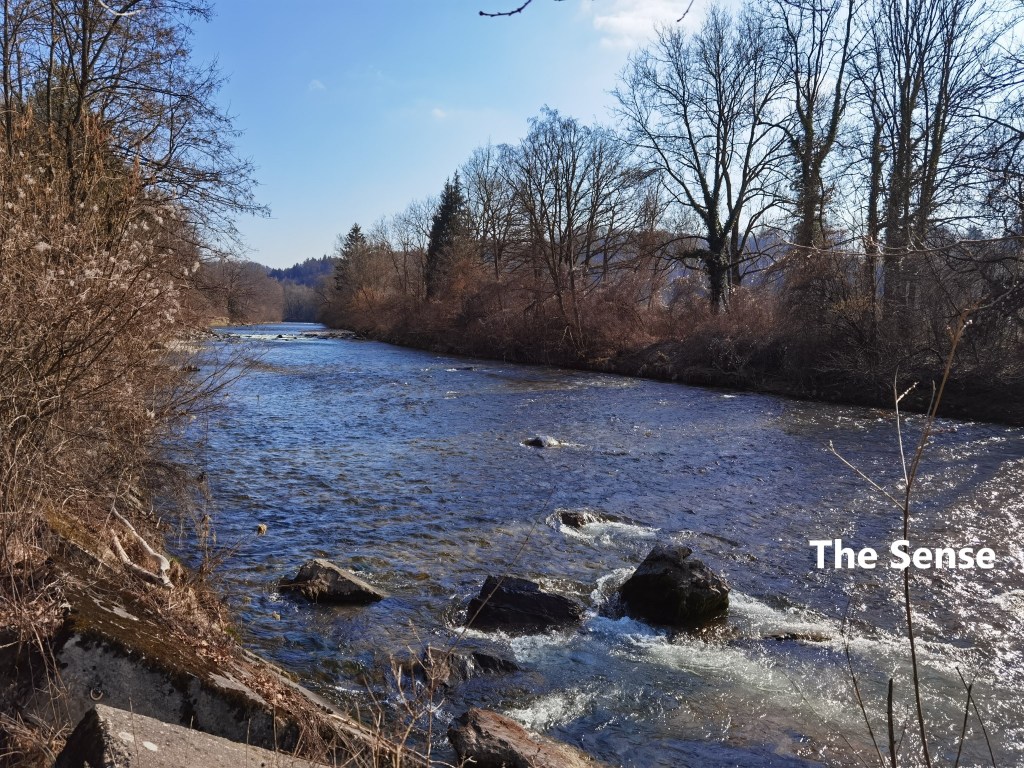
From Laupen, my route followed the trail eastwards along the bank of the Sense to reach Neuenegg. The trail is relatively flat on this stretch, and I made good time.
Neuenegg is another town with violence in its history. In 1798, a combination of social, religious, and political factors led Napoleon to invade Switzerland. The French came from two directions: from Basel and Geneva. The army that came via Geneva was welcomed by many along the way as it advanced toward Bern. But at Neuenegg, a much smaller force of Bernese troops defeated the French. However, it was a pyrrhic victory; the second French force under Napoleon himself had won at the battle of Grauholz, and the Bernese victors at Neuenegg had no choice but to withdraw. The overall French victory ushered in the short-lived Helvetic Republic. It was yet another example of an invading army, initially welcomed in some quarters soon came to be despised and resisted. One of the lost lessons of history.
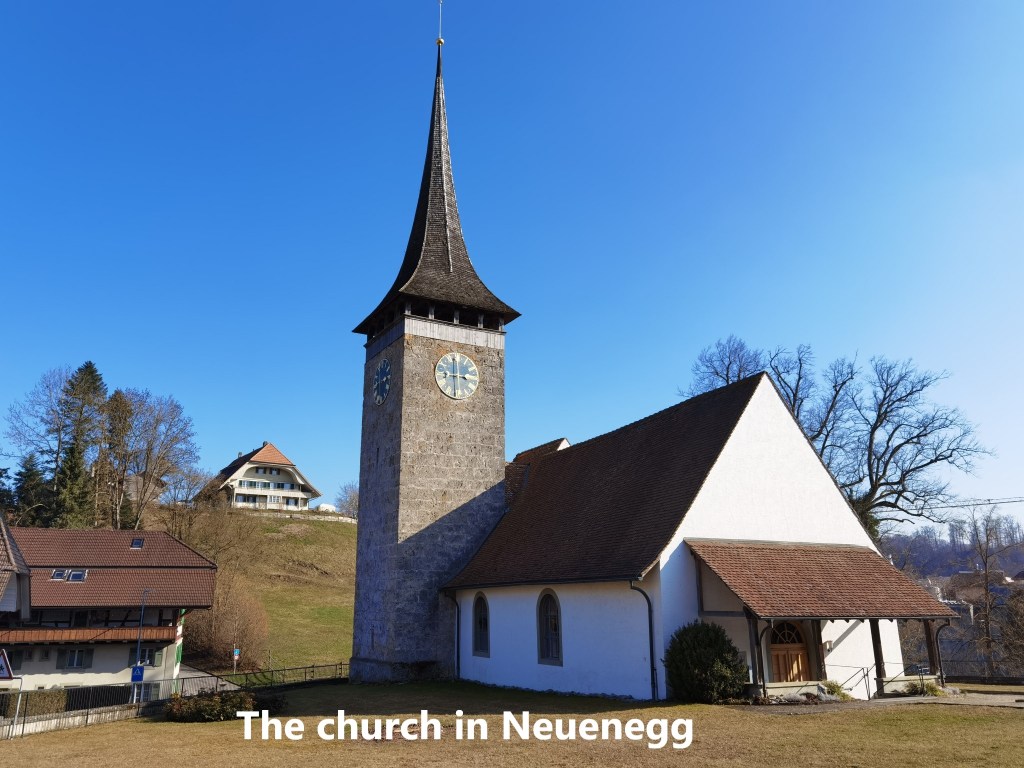
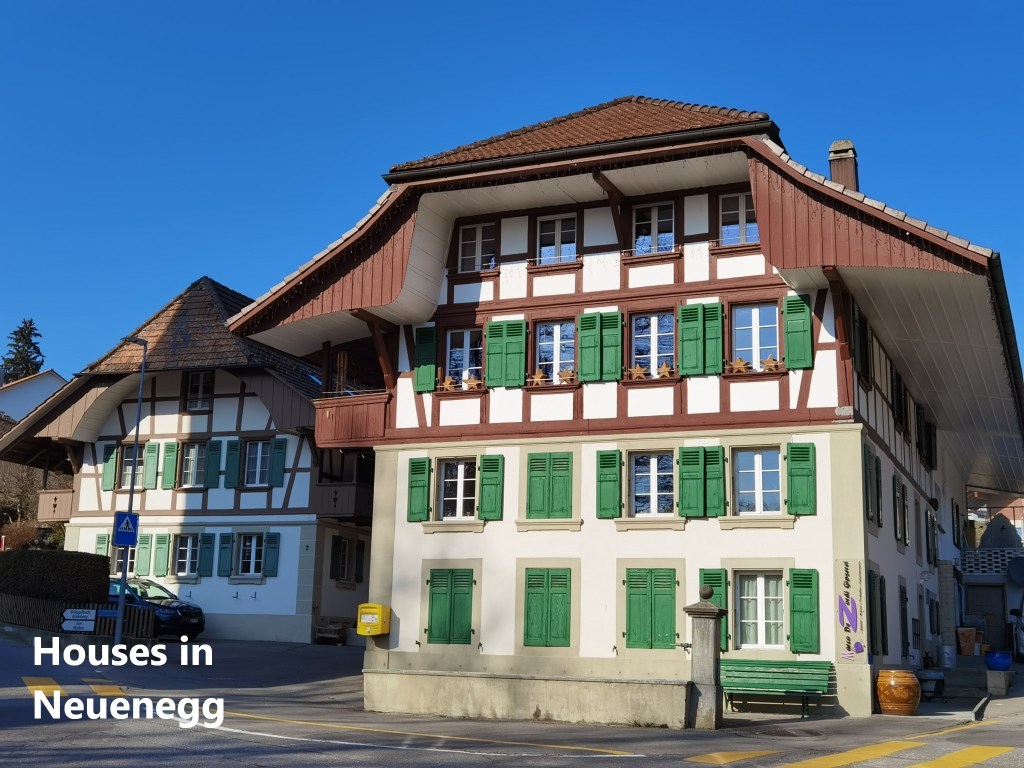
When I entered Neuenegg, it was at the industrial area near the river. A short distance to the north is the real village. The church ahs a plaque on the outside commemorating local people killed in the battle in 1798. Unfortunately, the church, like so much else on that walk, was closed. Once again, the architecture of the village houses is pure Bernese.
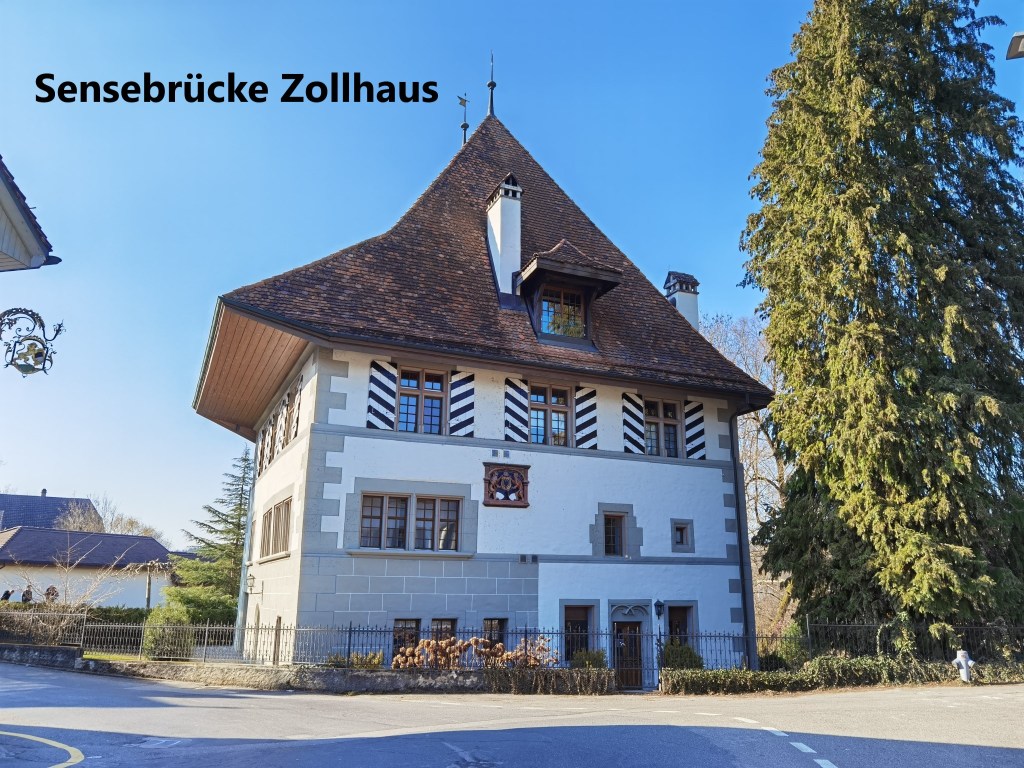
From Neuenegg, I went on the short distance further upstream along the Sense, and across to the other side. I made a short detour to see the historic Zollhouse at Sensebrücke before going on to the train station in Flamatt and the journey home. The original bridge at Sensebrücke was built in the middle of the sixteenth century and was itself a source of friction between Bern and Fribourg. Bern made Fribourg pay for the bridge, so Fribourg then enforced their laws on the bridge. For example a Bernese baker was punished for selling bread on the bridge. The Zollhaus was a customs office on the Fribourg side for the collection of taxes on Bernese goods. I can only wonder why the Bernese saw no need to build an equivalent structure on their side of the river.
It was an interesting walk. The route of this walk shows some of Switzerland’s more violent past, from 1339 in Laupen, to 1476 in Murten and 1798 in Neuenegg. Definitely, there has never been 500 years of peace in Switzerland.
And my total step count for the day was 45,164.